
The Savannah State University College of Sciences & Technology’s Outreach & Career Development Office (SSU COST O&CD) sustains regional leadership roles and responsibilities through continuous identification and registration of K-16 students and educators as cohort participants who receive early exposure to SSU STEM programs, as well as scholarly opportunities including, but not limited to:
- F.I.R.S.T. LEGO Competition
- GA Science and Engineering Fair
- SECME Inc. National Students Competitions
- SeaPearch Competition (ROV)
- Summer enrichment/exposure
- Educators workshops and training
K-16 Outreach builds the cohorts of educators and students engaging in innovative STEM related activities and events through the calendar year.
Fairs & Workshops
FIRST LEGO League
FIRST LEGO League (FLL) is a robotics program for ages 9 to 16 (ages 9 to 14 in US/CAN/MEX), which is designed to get children excited about science and technology, and teach them valuable employment and life skills. Teams, composed of up to ten children with at least one adult coach, can also be associated with a pre-existing club or organization, home-schooled, or just be a group of friends who wish to do something awesome.
In FLL, the children do the work. While the program involves LEGO robotics, FLL goes far beyond robotics, with teams examining real-life problems and developing innovative solutions. And the work is programming an autonomous robot (using the LEGO® MINDSTORMS® robot set) to score points on a thematic playing surface, creating an innovative solution to a problem as part of their project, all while being guided by the FLL Core Values.
Georgia Science and Engineering Fair
The Savannah Regional Science and Engineering Fair gives students a venue to develop crucial critical thinking, problem-solving, communication, teamwork, and personal management skills, which are essential to thrive in today’s technological society.
Two types of awards are presented at the Savannah State University-Savannah Regional Science and Engineering Fair: category and special awards.
Category judges choose category award winners. The number of awards (1st, 2nd, 3rd) depends on participation levels and the quality of projects within each category. To receive a category award, student projects must meet the high standards of the fair as a whole and be of the highest quality within their category. If a category has only a handful of projects, the projects are judged individually, but they are held to the same high standards as other categories. For this reason, not all categories are guaranteed 1st, 2nd, and 3rd place prizes. (If a category has only one or two projects, those projects will not necessarily be awarded 1st and 2nd place prizes.) In addition to category awards, special awards are sponsored by local and national businesses and organizations. Eligibility varies from award to award, and recipients are chosen by special awards judges.
K-5 Regional Science and Engineering Fair
The Savannah Regional Science and Engineering Fair gives students a venue to develop important critical thinking, problem-solving, communication, teamwork and personal management skills, which are essential in order to thrive in today’s technological society.
The K-5 Regional Fair showcases the results of scientific inquiry by grades K-5 students in our region. Participants learn how to identify problems and design unique, organized and logical strategies to solving the questions. The research process teaches students how scientists and engineers contribute to the advancement of science and engineering. The early pivotal moments of scientific inquiry can have significant impacts on their curiosity and confidence.
Category award winners are chosen by category judges. The number of awards (1st, 2nd, 3rd) depends on participation levels and quality of projects within each category. To receive a category award student projects must meet the high standards of the fair as a whole and be of the highest quality within their category. If a category has only a handful of projects, the projects are judged individually, but they are held to the same high standards as other categories.
For this reason, not all categories are guaranteed 1st, 2nd and 3rd place prizes. (If a category has only one or two projects, those projects will not necessarily be awarded 1st and 2nd place prizes.) In addition to category awards, special awards are sponsored by local and national businesses and organizations. Eligibility varies from award to award, and recipients are chosen by special awards judges.
STEM 360 Summer Enrichment
The SSU STEM 360 Summer Enrichment Camp is one of the major outreach efforts of STEM 360. The annual camp provides an alternative summer experience through STEM enrichment. Students participate in sessions that enhance their knowledge and appreciation of STEM subjects. The activities offered during camp also support the SECME and FIRST LEGO League competitions that the STEM 360 activity hosts every year.
2026 Regional Science and Engineering Fair Results
Savannah State University proudly announces the official results of the 2026 Regional Science & Engineering Fair. After a comprehensive review process conducted by our distinguished panel of judges, the following projects have earned category awards.
All awarded projects listed below will advance to represent the region at the Georgia State Science & Engineering Fair.
This year’s competition showcased exceptional innovation, research rigor, and scientific excellence across both divisions.
BEST IN FAIR AWARDS
Best in Fair – High School
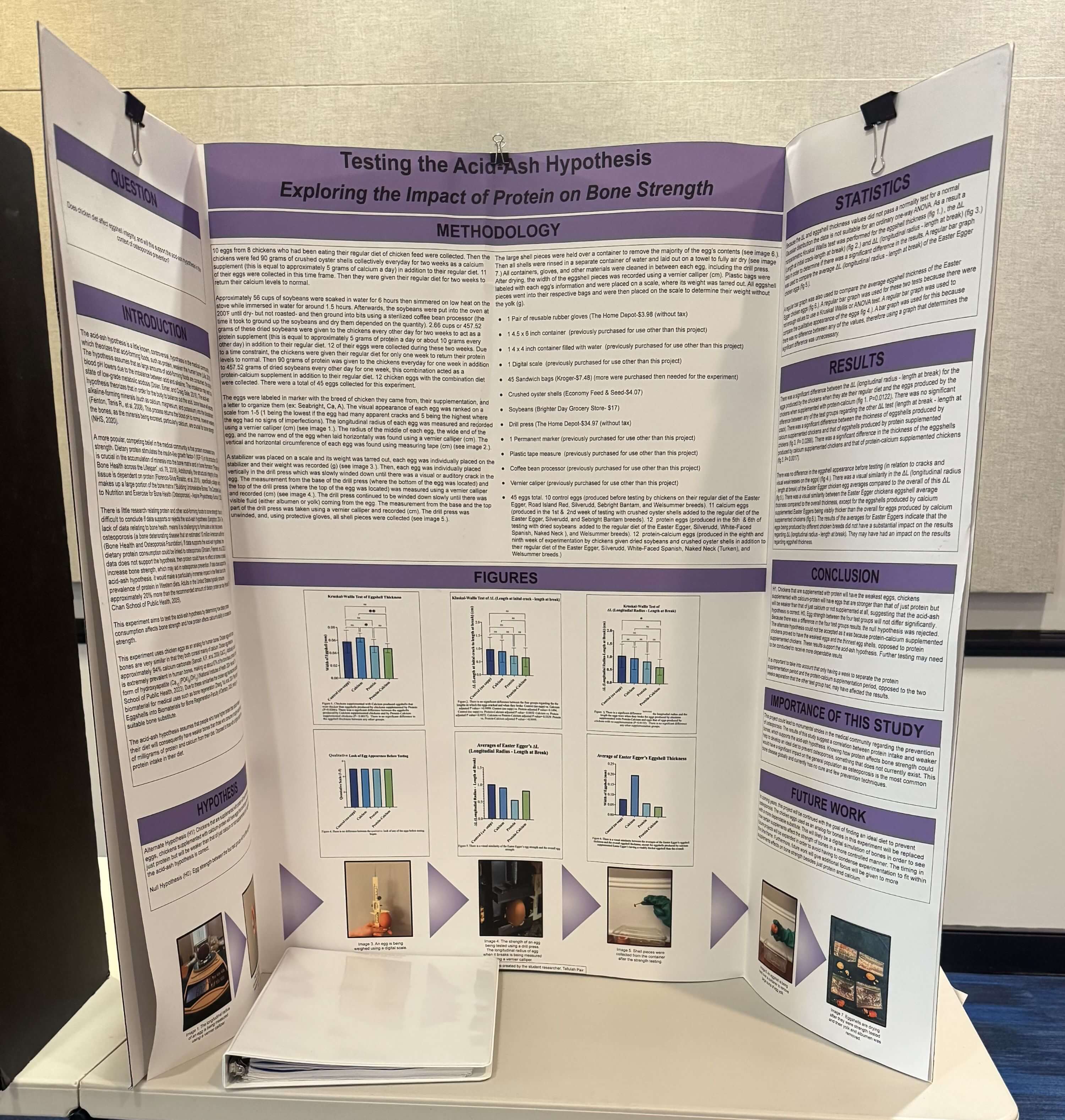
Tallulah Pair, Savannah Arts Academy, Testing the Acid-Ash Hypothesis: Exploring the Impact of Protein on Bone Strength. Category: Translational Medical Science
Best in Fair – Middle School
Lila Evans, St. Francis Xavier Catholic School, “Shining Light to End Plastic’s Flight!” Category: Chemistry
HIGH SCHOOL CATEGORY AWARDS
Translational Medical Science
First Place: Tallulah Pair, Savannah Arts Academy – Testing the Acid-Ash Hypothesis: Exploring the Impact of Protein on Bone Strength
Second Place: Raeed Ahad, Statesboro High School – Targeting Atherosclerosis via CD36 Inhibition
Robotics
First Place: Emeline Giordano & Alexis Mincey, Islands High School – Can A.I. Spot A.I.?
Engineering Mechanics
First Place: Madilynn Hagemes, Savannah Arts Academy – How Does Prolonged Exposure to Hot Water Influence the Release of Chemical Contaminants from Different Residential Plumbing Pipe Materials into Drinking Water?
Second Place: Siddartha Sarakadam, Jenkins High School – Space Junk: Developing a Solution to the Evolving Space Debris Problem
Engineering: General & Sustainable Design
First Place: Jun Hao Lin & Ishant Singh, Jenkins High School – REST Regenerative Energy Suspension Tire
Second Place: Andrew Davis & Michael Cooler, Islands High School – Insulation and Sustainability
Biomedical Engineering
First Place: Kaylee Adkins, Statesboro High School – Using the Worm-Like Chain Model to Show How Higher ATP Levels During DNA Duplication Increase Mutation Risk
Animal Sciences
First Place: Emma Bliss, Islands High School – Blue Crab Bait Wars
Second Place: Mia Whitmore & Avery Ramsey, Islands High School – Effect of Acidification on Marine Invertebrate Shells
Environmental Engineering
First Place: Suceli Perez Lopez, Jazmine Brown, and Noe Mateos, Alfred Ely Beach High School – Spanish Moss as an Additive or Alternative Material for Recycled Paper Production
Biochemistry
First Place: Peyton Chapman, Statesboro High School – How Does Insecticide Location Affect the Ratio of Flies and Maggot Numbers to a Chicken Leg?
Earth & Environmental Sciences
First Place: Shrila Patel, Abigayle Deane Cook, and Nicolle Destini Eady, School of Liberal Studies at Savannah High – Small Bits – Big Waves
Cellular & Molecular Biology
First Place: Walter Yang, Savannah Arts Academy – Inducing Accelerated Antimicrobial Resistance in Non-Pathogenic Bacteria
MIDDLE SCHOOL CATEGORY AWARDS
Chemistry
First Place: Lila Evans, St. Francis Xavier Catholic School – “Shining Light to End Plastic’s Flight!”
Materials Science
First Place: Merrin Chapman, William James Middle School – A Pyromaniac’s Science Project: How Do Different Combustibles Used in Raku Firing Affect Glaze Color?
Second Place: Lundyn Brown, The STEM Academy at Bartlett – Which Brand of Paper Towel Is Most Absorbent Before Oversaturation?
Third Place: Colin Senger, Kaden Davis, and Harold (Hank) Mathews, Tybee Island Maritime Academy – Different Cooling Methods Change Performance
Cellular & Molecular Biology
First Place: Addison Padgett, The STEM Academy at Bartlett – Does a Higher Concentration of Microplastics in Irrigation Water Affect the Growth of Bermuda Grass Over a three-week Period?
Second Place: Emilia Mackowiak, The STEM Academy at Bartlett – How Does Acid Rain Affect the Cellular Structure of Grass?
Plants
First Place: Amayra Jaglan, Godley Station School – Georgia Garden Showdown
Second Place: Amelia Hotard, St. James Catholic School – Do Tomatoes Grow Better Upside Down?
Third Place: Cecelia Swope, Elliott Clackum, and Sean Wilder, Tybee Island Maritime Academy – How Do Different Light Frequencies Affect Vitamin C in Oranges?
Engineering Mechanics
First Place: Ace Stringfellow, St. Francis Xavier Catholic School – A Wave Energy Conversion Machine in Action
Biomedical Engineering
First Place: Righteous Tangie, John W. Hubert Middle School – Framing Intelligence: Perception Through Terminology
Physics & Astronomy
First Place: Jackson Gulle, St. James Catholic School – Aerodynamic Efficiency of Vehicle Body Shapes
Second Place: Thomas Tessier, St. James Catholic School – How Does the Amount of Water in a Bottle Rocket Affect Its Range?
Third Place: Dominic Strazzella, Tybee Island Maritime Academy – The Roller Coaster Launch
Closing Statement
Savannah State University commends all participating students, educators, and families for their dedication to scientific inquiry and innovation.
We proudly look forward to these outstanding young scholars representing our region at the Georgia State Science & Engineering Fair.
Helpful Resources
