
From longtime traditions and campus favorites to new experiences across Savannah, Homecoming brings Tigers from every generation together for a week celebrating the people, places and memories that make SSU home. Explore the full lineup and start planning your week at The S.H.O.W.
Electrical Engineering Technology
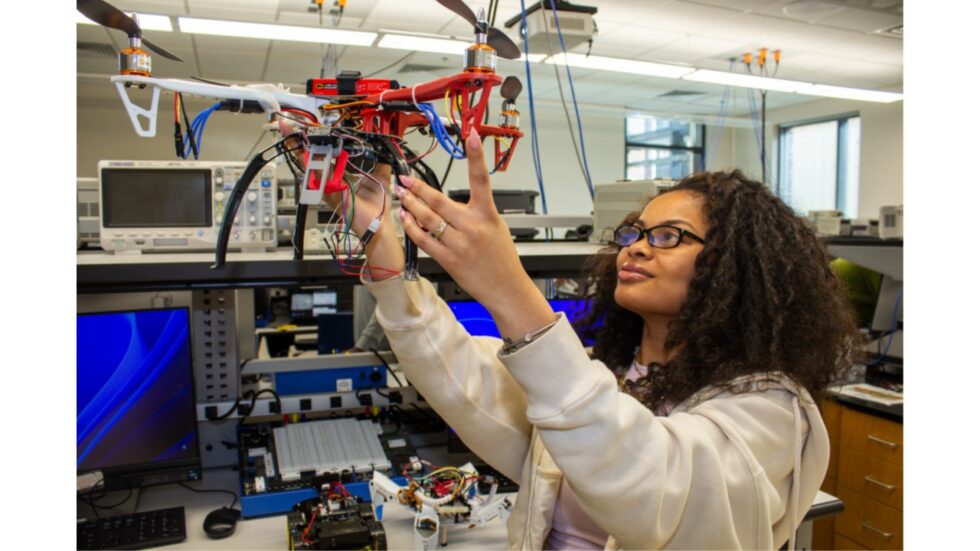
The Electrical Engineering Technology (EET) curriculum prepares students in the fundamentals of modern electronics theory, with emphasis on the application of theoretical principles to actual electronic devices, circuits and systems.
Electrical Engineering Technology (EET) is a 4-year ABET-accredited program requiring 120 credit hours, with students completing 15 credit hours per semester
College & Schools
Engineering Technology and Computing
Program Type
Major, Minor
Accreditation
Engineering Technology Accreditation Commission of ABET, https://www.abet.org
 The Bachelor of Science in Electrical Engineering Technology is accredited by the Engineering Technology Accreditation Commission of ABET, https://www.abet.org, under the General Criteria and the Program Criteria for Electrical/Electronic(s) Engineering Technology and Similarly Named Programs.
The Electrical Engineering Technology curriculum provides instruction in Embedded Systems and IoT, Automation and Control Systems, Power and Energy Systems, Machine Learning and Intelligent Systems, Cybersecurity and Network Systems, and Field Engineering and Technical Support.
Electrical Engineering Technology, BS
Electrical Engineering Technology, Minor
$72,800
Average Salary
Electronic Engineering Technologists & Technicians
100K
New Jobs Created
In Electronic Engineering Careers
CAREERS IN ELECTRICAL ENGINEERING TECHNOLOGY
Graduates of the Electrical Engineering Technology program are prepared for careers in:
- Research and Development – Assists in the design, testing, and improvement of electronic and electrical systems.
- Embedded Systems and Internet of Things (IoT)– Develops and supports microcontroller based systems, smart devices, sensors, and connected technologies.
- Automation and Control Systems – Works with robotics, programmable logic controllers (PLCs), industrial automation, and smart manufacturing systems.
- Power and Energy Systems – Supports electrical power generation, Electrical Engineering Technology
- Power and Energy Systems – Supports electrical power generation, distribution, renewable energy, and smart grid technologies.
- Machine Learning and Intelligent Systems – Applies data-driven methods and AI-enabled technologies in engineering applications.
- Cybersecurity and Network Systems – Helps secure industrial control systems, communication networks, and critical infrastructure.
- Field Engineering and Technical Support – Installs, tests, troubleshoots, and maintains electrical, electronic, and communication systems.
POTENTIAL JOB TITLES/ EMPLOYERS
Electrical Engineer
Applications Engineer
Field Engineer
Controls Engineer
Systems Engineer
Potential Employers:
Gulfstream Aerospace
Lockheed Martin
Kimberly Clark
Hyundai Motor Group Meta Plant America
General Electric
Georgia Ports
Blue Ridge Technologies
Applications Engineer
Field Engineer
Controls Engineer
Systems Engineer
Potential Employers:
Gulfstream Aerospace
Lockheed Martin
Kimberly Clark
Hyundai Motor Group Meta Plant America
General Electric
Georgia Ports
Blue Ridge Technologies
